<< < 1 2 3 4 5 6 7 8 9 > >>   Sort: Date

How To Invoke the Data Pump Export Utility
How To Invoke the Data Pump Export Utility? - Oracle DBA FAQ - Loading and Exporting Data The Data Pump Export utility is distributed as executable file called "expdp.exe". To invoke this utility, you should go to the "bin" directory of your Oracle server installation and run the "expdp" command. He...
2007-05-01, 5720👍, 0💬

How To Place Comments in PL/SQL
How To Place Comments in PL/SQL? - Oracle DBA FAQ - Understanding PL/SQL Language Basics There are two ways to place comments into PL/SQL codes: SQL Statement Style: Starts you comment any where in the line but prefixed with '--'. The comment ends at the end of the line. C Language Style: Starts you...
2007-05-01, 5718👍, 0💬

How To Return Top 5 Rows
How To Return Top 5 Rows? - Oracle DBA FAQ - Understanding SQL SELECT Query Statements If you want the query to return only the first 5 rows, you can use the pseudo column called ROWNUM in the WHERE clause. ROWNUM contains the row number of each returning row from the query. The following statement ...
2007-04-18, 5694👍, 0💬

How To Connect to a Remote Server
How To Connect to a Remote Server? - Oracle DBA FAQ - Introduction to Oracle SQL Developer If you have an Oracle server running remotely on a network, and you know all the access information needed, you can following steps to connect your Oracle SQL Developer: Start Oracle SQL Developer Right-click ...
2007-04-26, 5692👍, 0💬

How To Define an Anonymous Block
How To Define an Anonymous Block? - Oracle DBA FAQ - Introduction to PL/SQL An anonymous block must have an execution part, which is a group of other PL/SQL statements enclosed in the BEGIN ... END statement. Here is a script on how to define a simple anonymous block with SQL*Plus: SQL> set serverou...
2007-04-25, 5682👍, 0💬

What Are the Predefined Tablespaces in a Database
What Are the Predefined Tablespaces in a Database? - Oracle DBA FAQ - Managing Oracle Tablespaces and Data Files When you create a new database, Oracle server will create 4 required tablespaces for the new database: SYSTEM Tablespace - Every Oracle database contains a tablespace named SYSTEM, which ...
2007-05-03, 5669👍, 0💬

How To Find Out What Privileges a User Currently Has
How To Find Out What Privileges a User Currently Has? - Oracle DBA FAQ - Managing Oracle User Accounts, Schema and Privileges Privileges granted to users are listed in two system views: DBA_SYS_PRIVS, and USER_SYS_PRIVS. You can find out what privileges a user currently has by running a query on tho...
2007-05-01, 5658👍, 0💬

How To Sort Output in Descending Order
How To Sort Output in Descending Order? - Oracle DBA FAQ - Understanding SQL SELECT Query Statements If you want to sort a column in descending order, you can specify the DESC keyword in the ORDER BY clause. The following SELECT statement first sorts the department in descending order, then sorts th...
2007-04-20, 5654👍, 0💬

How To Turn On or Off Recycle Bin for the Instance
How To Turn On or Off Recycle Bin for the Instance? - Oracle DBA FAQ - Managing Oracle Database Tables You can turn on or off the recycle bin feature for an instance in the instance parameter file with "recyclebin=on/off". You can also turn on or off the recycle bin feature on the running instance w...
2007-05-04, 5653👍, 0💬

What Happens to the Indexes If a Table Is Recovered
What Happens to the Indexes If a Table Is Recovered? - Oracle DBA FAQ - Managing Oracle Table Indexes If you dropped a table, and recovered it back from the recycle bin, what happens to its indexes? Are all indexes recovered back automatically? The answer is that all indexes will be recovered, if yo...
2007-05-03, 5652👍, 0💬

What Are the Types PL/SQL Code Blocks
What Are the Types PL/SQL Code Blocks? - Oracle DBA FAQ - Understanding PL/SQL Language Basics There are 3 types of PL/SQL code blocks: Anonymous Block - A block of codes with no name. It may contain a declaration part, an execution part, and exception handlers. Stored Program Unit - A block of code...
2007-05-01, 5647👍, 0💬

How To Divide Query Output into Groups
How To Divide Query Output into Groups? - Oracle DBA FAQ - Understanding SQL SELECT Query Statements You can divide query output into multiple groups with the GROUP BY clause. It allows you specify a column as the grouping criteria, so that rows with the same value in the column will be considered a...
2007-04-20, 5647👍, 0💬

How To Assign Values to Variables
How To Assign Values to Variables? - Oracle DBA FAQ - Understanding PL/SQL Language Basics You can use assignment statements to assign values to variables. An assignment statement contains an assignment operator ":=", which takes the value specified on the right to the variable on left. The script b...
2007-04-30, 5645👍, 0💬

How To Define and Use Table Alias Names
How To Define and Use Table Alias Names? - Oracle DBA FAQ - Understanding SQL SELECT Query Statements When column names need to be prefixed with table names, you can define table alias name and use them to prefix column names as shown in the following select statement: SQL> SELECT e.first_name, e.la...
2007-04-19, 5644👍, 0💬

What Are the Original Export and Import Utilities
What Are the Original Export and Import Utilities? - Oracle DBA FAQ - Loading and Exporting Data Oracle original Export and Import utilities are standalone programs that provide you a simple way for you to transfer data objects between Oracle databases, even if they reside on platforms with differen...
2007-05-02, 5642👍, 0💬

How To Connect MS Access to Oracle Servers
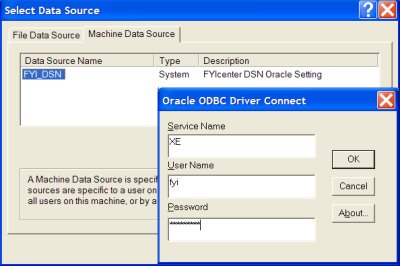
How To Connect MS Access to Oracle Servers? - Oracle DBA FAQ - ODBC Drivers, DSN Configuration and ASP Connection Once you got a DSN defined in the ODBC manager that connects to an Oracle server, you can connect a normal MS Access document to the Oracle server, and link an Access table to Oracle tab...
2007-04-17, 5640👍, 0💬

What Is Output Spooling in SQL*Plus
What Is Output Spooling in SQL*Plus? - Oracle DBA FAQ - Introduction to Command-Line SQL*Plus Client Tool The output spooling a nice feature of the command-line SQL*Plus tool. If the spooling feature is turned on, SQL*Plus will send a carbon copy of the everything on your screen to a specified local...
2007-04-29, 5636👍, 0💬

How To Load Data with SQL*Loader
How To Load Data with SQL*Loader? - Oracle DBA FAQ - Loading and Exporting Data Let's say you have a table defined as: CREATE TABLE student (id NUMBER(5) PRIMARY KEY, first_name VARCHAR(80) NOT NULL, last_name VARCHAR(80) NOT NULL, birth_date DATE NOT NULL, social_number VARCHAR(80) UNIQUE NOT NULL)...
2007-04-30, 5632👍, 0💬

How To Define a Sub Procedure
How To Define a Sub Procedure? - Oracle DBA FAQ - Creating Your Own PL/SQL Procedures and Functions A sub procedure is a named procedure defined and used inside another procedure or function. You need to define a sub procedure in the declaration part of the enclosing procedure or function. Sub proce...
2007-04-25, 5628👍, 0💬

How Many File Formats Are Supported to Export Data
How Many File Formats Are Supported to Export Data? - Oracle DBA FAQ - Introduction to Oracle SQL Developer Oracle SQL Developer can allow to export table data into files in the following formats: TXT - Tab delimited fields file format. CSV - Comma Separated Values (CSV) file format. LOADER - File f...
2007-04-27, 5624👍, 0💬

What Is SQL*Plus
What Is SQL*Plus? - Oracle DBA FAQ - Oracle Basic Concepts SQL*Plus is an interactive and batch query tool that is installed with every Oracle Database Server or Client installation. It has a command-line user interface, a Windows Graphical User Interface (GUI) and the iSQL*Plus web-based user inter...
2007-04-22, 5620👍, 0💬

Can You Assign Multiple Query Result Rows To a Variable
Can You Assign Multiple Query Result Rows To a Variable? - Oracle DBA FAQ - Working with Database Objects in PL/SQL You can use "SELECT ... INTO variable" to assign query results to variables. But what happens if the SELECT statements return multiple rows? The answer is that you will get a run time ...
2007-04-27, 5605👍, 0💬

What Is the Order of Defining Local Variables and Sub Procedures/Functions
What Is the Order of Defining Local Variables and Sub Procedures/Functions? - Oracle DBA FAQ - Creating Your Own PL/SQL Procedures and Functions In the declaration part, you must define all local variables before defining any sub procedures or sub functions. See the following sample script: SQL> CRE...
2007-04-25, 5597👍, 0💬

How To Use "FOR" Statements
How To Use "FOR" Statements? - Oracle DBA FAQ - Understanding PL/SQL Language Basics If you have a block of codes to be executed repeatedly over a range of values, you can use the "FOR ... LOOP" statement. Here is a sample script on FOR statements: DECLARE total NUMBER := 0; BEGIN FOR i IN 1..10 LOO...
2007-04-29, 5592👍, 0💬

<< < 1 2 3 4 5 6 7 8 9 > >>   Sort: Date