<< < 1 2 3 4 5 6 7 8 9 10 11 > >>   Sort: Date

How To Update Values on Multiple Rows
How To Update Values on Multiple Rows? - Oracle DBA FAQ - Understanding SQL DML Statements If the WHERE clause in an UPDATE matches multiple rows, the SET clause will be applied to all matched rows. This rule allows you to update values on multiple rows in a single UPDATE statement. Here is a good e...
2007-04-21, 5648👍, 0💬

What Are the Numeric Comparison Operations
What Are the Numeric Comparison Operations? - Oracle DBA FAQ - Understanding PL/SQL Language Basics PL/SQL supports 6 basic numeric comparison operations as shown in the following sample script: PROCEDURE proc_comparison AS res BOOLEAN; BEGIN res := 1 = 2; res := 1 2; res := 1 = 2; res := 1 2; -- mo...
2007-04-30, 5646👍, 0💬

What Happens If Recursive Calls Get Out of Control
What Happens If Recursive Calls Get Out of Control? - Oracle DBA FAQ - Creating Your Own PL/SQL Procedures and Functions What happens if your code has bug on recursive procedure calls, which causes an infinite number nested procedure calls? The answer is so good. Oracle server seems to offer no prot...
2007-04-25, 5634👍, 0💬

What Is a Cursor Variable
What Is a Cursor Variable? - Oracle DBA FAQ - Working with Cursors in PL/SQL A cursor variable is a variable of a specific REF CURSOR data type, which is a pointer to a data structure resource connects to query statement result, similar to the CURSOR data type.. The advantage of using cursor variabl...
2007-04-28, 5631👍, 0💬

What Is Stored Program Unit
What Is Stored Program Unit? - Oracle DBA FAQ - Introduction to PL/SQL A stored program unit is a named block of codes which: Has a name. Can take parameters, and can return values. Is stored in the data dictionary. Can be called by many users.
2007-04-25, 5630👍, 0💬

How Can Windows Applications Connect to Oracle Servers
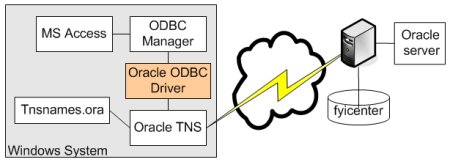
How Can Windows Applications Connect to Oracle Servers? - Oracle DBA FAQ - ODBC Drivers, DSN Configuration and ASP Connection A Windows application can connect to an Oracle server directly, if it knows how to use the Oracle TNS technology. A Windows application can connect to an Oracle server indire...
2007-04-17, 5627👍, 0💬

How To Connect ASP Pages to Oracle Servers
How To Connect ASP Pages to Oracle Servers? - Oracle DBA FAQ - ODBC Drivers, DSN Configuration and ASP Connection If you are running Windows IIS Web server and serving ASP Web pages, you can get data from Oracle servers into your ASP pages through ODBC drivers. To do this, you need to install the co...
2007-04-17, 5608👍, 0💬

How To See the Table Columns Used in an Index
How To See the Table Columns Used in an Index? - Oracle DBA FAQ - Managing Oracle Table Indexes You can a list of indexes in your schema from the USER_INDEXES view, but it will not give you the columns used in each index in the USER_INDEXES view. If you want to see the columns used in an index, you ...
2007-04-27, 5582👍, 0💬

How To Generate Query Output in HTML Format
How To Generate Query Output in HTML Format? - Oracle DBA FAQ - Introduction to Command-Line SQL*Plus Client Tool If you want your query output to be generated in HTML format, you can use the "SET MARKUP HTML ON" to turn on the HTML feature. The following tutorial exercise gives you a good example: ...
2007-04-29, 5581👍, 0💬

How To Create Tables for ODBC Connection Testing
How To Create Tables for ODBC Connection Testing? - Oracle DBA FAQ - ODBC Drivers, DSN Configuration and ASP Connection If you want to follow the tutorial exercises in the sections below, you need to create a user account and a table for ODBC connection testing as shown here: SQL> CONNECT system/ret...
2007-04-17, 5579👍, 0💬

How To Use "WHILE" Statements
How To Use "WHILE" Statements? - Oracle DBA FAQ - Understanding PL/SQL Language Basics If you have a block of codes to be executed repeatedly based a condition, you can use the "WHILE ... LOOP" statement. Here is a sample script on WHILE statements: DECLARE total NUMBER; BEGIN total := 0; WHILE tota...
2007-04-29, 5577👍, 0💬

How To Lock and Unlock a User Account
How To Lock and Unlock a User Account? - Oracle DBA FAQ - Managing Oracle User Accounts, Schema and Privileges If you want to lock a user account for a short period of time, and unlock it later, you can use the ALTER USER ... ACCOUNT command. The following sample script shows how to use this command...
2007-05-01, 5568👍, 0💬

What Are the Differences between NUMBER and BINARY_FLOAT
What Are the Differences between NUMBER and BINARY_FLOAT? - Oracle DBA FAQ - Understanding SQL Basics The main differences between NUMBER and BINARY_FLOAT are: NUMBER stores values as fixed-point numbers using 1 to 22 bytes. BINARY_FLOAT stores values as single precision floating-point numbers.
2007-04-24, 5560👍, 0💬

How To Name Query Output Columns
How To Name Query Output Columns? - Oracle DBA FAQ - Understanding SQL SELECT Query Statements Each column in the query output has a default name. If you don't like the default name, you can specify a new name for any column in the query output by using the AS clause. The following statement shows y...
2007-04-19, 5559👍, 0💬

How To Rename an Existing Table
How To Rename an Existing Table? - Oracle DBA FAQ - Managing Oracle Database Tables If you don't like the name of an existing table, you change it by using the CREATE TABLE ... RENAME TO statement. Here is a sample script: SQL> connect HR/fyicenter Connected. SQL> CREATE TABLE emp_dept_10 2 AS SELEC...
2007-05-03, 5557👍, 0💬

What Are the Differences between INTERVAL YEAR TO MONTH and INTERVAL DAY TO SECOND
What Are the Differences between INTERVAL YEAR TO MONTH and INTERVAL DAY TO SECOND? - Oracle DBA FAQ - Understanding SQL Basics The main differences between INTERVAL YEAR TO MONTH and INTERVAL DAY TO SECOND are: INTERVAL YEAR TO MONTH stores values as time intervals at the month level. INTERVAL DAY ...
2007-04-24, 5546👍, 0💬

How To Create a Testing Table
How To Create a Testing Table? - Oracle DBA FAQ - Understanding SQL Transaction Management If you want to practice DML statements, you should create a testing table as shown in the script below: >cd (OracleXE home directory) >.\bin\sqlplus /nolog SQL> connect HR/fyicenter Connected. SQL> CREATE TABL...
2007-04-18, 5546👍, 0💬

How To Count Groups Returned with the GROUP BY Clause
How To Count Groups Returned with the GROUP BY Clause? - Oracle DBA FAQ - Understanding SQL SELECT Query Statements If you use the COUNT(*) function on groups returned with the GROUP BY clause, it will count the number of rows within each group, not the number of groups. If you want to count the num...
2007-04-19, 5545👍, 0💬

How To Import One Table Back from a Dump File
How To Import One Table Back from a Dump File? - Oracle DBA FAQ - Loading and Exporting Data If you only want to import one table back to the database, you can use a dump file that was created by full export, schema export or a table export. The following tutorial exercise shows you how to import th...
2007-05-02, 5543👍, 0💬

How To Create a Single Index for Multiple Columns
How To Create a Single Index for Multiple Columns? - Oracle DBA FAQ - Managing Oracle Table Indexes If you know a group of multiple columns will be always used together as search criteria, you should create a single index for that group of columns with the "ON table_name(col1, col2, ...)" clause. He...
2007-04-27, 5541👍, 0💬

How To Call a Stored Function
How To Call a Stored Function? - Oracle DBA FAQ - Creating Your Own PL/SQL Procedures and Functions A stored function can be called as part of expression in any PL/SQL statement. One simplest way to call a stored function is to a dummy SELECT statement as shown in the following tutorial script using...
2007-04-26, 5541👍, 0💬

What Is SQL*Plus
What Is SQL*Plus? - Oracle DBA FAQ - Introduction to Command-Line SQL*Plus Client Tool SQL*Plus is an interactive and batch query tool that is installed with every Oracle Database Server or Client installation. It has a command-line user interface, a Windows Graphical User Interface (GUI) and the iS...
2007-04-28, 5539👍, 0💬

How Many Types of Cursors Supported in PL/SQL
How Many Types of Cursors Supported in PL/SQL? - Oracle DBA FAQ - Working with Cursors in PL/SQL PL/SQL supports two types of cursors: The implicit cursor - A single default cursor that automatically connects to the last DML statement executed. Explicit cursors - User defined cursors with specific D...
2007-04-29, 5538👍, 0💬

What Are the Restrictions on External Table Columns
What Are the Restrictions on External Table Columns? - Oracle DBA FAQ - Loading and Exporting Data When creating external table columns, you need to watch out some restrictions: "PRIMARY KEY" is not allowed. "NOT NULL" is not allowed. "DEFAULT value" is not allowed.
2007-04-30, 5536👍, 0💬

<< < 1 2 3 4 5 6 7 8 9 10 11 > >>   Sort: Date